What Is Transformer Impedance and Why Does It Matter?


Transformer impedance is an important factor in how electrical equipment delivers power, maintains voltage, and responds to short circuits. Although it may not be the first specification people consider when selecting equipment, understanding it can help explain voltage changes, fault current levels, and overall system performance. For commercial and industrial applications, this characteristic plays an important role in electrical system design.
What Is It?
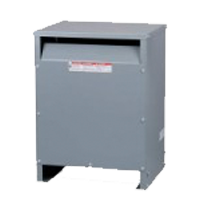
Transformer impedance describes the opposition to alternating current within a unit’s windings. It comes from two electrical properties: resistance and reactance.
Resistance is the opposition to current flow through the winding conductors. Reactance comes primarily from magnetic leakage flux associated with the windings. Together, these properties influence how current flows and how voltage changes under load.
Unlike basic resistance, which is measured in ohms, transformer impedance is commonly expressed as a percentage of the equipment’s rated values. This makes it easier to compare units with different voltage and power ratings.
Understanding Transformer Impedance Percentage
The percentage indicates how much of the rated voltage must be applied to one winding to produce rated current when another winding is short-circuited under controlled test conditions. For example, a unit with 5% impedance requires approximately 5% of its rated voltage to produce full-load current during this test.
A higher percentage means greater opposition to current flow, while a lower percentage generally allows more current to flow under the same conditions. Understanding transformer impedance percentage helps when evaluating equipment compatibility, voltage performance, and electrical protection requirements.
How Does It Affect Voltage Regulation?
Voltage regulation describes how much the output voltage changes between no-load and loaded conditions while the input voltage remains constant. As electrical demand increases, current flowing through the windings creates an internal voltage drop, which can cause the output voltage to decrease.
Transformer impedance influences this change, but the actual voltage drop also depends on the load’s power factor and the resistance and reactance components. Lower impedance generally supports smaller voltage drops under load, while higher impedance can produce greater changes in output voltage, especially during periods of heavy demand.
For facilities operating sensitive equipment, maintaining appropriate voltage levels is important for reliable performance.
Why Does Impedance Matter for Short-Circuit Current?
One of the most important effects of transformer impedance is its influence on available short-circuit current. A short circuit creates an unintended low-resistance path that can allow extremely high current to flow. Internal impedance helps limit this current, with lower impedance generally allowing higher fault currents and higher impedance reducing them.
This relationship matters when selecting circuit breakers, fuses, and other protective devices because they must have appropriate ratings to safely interrupt potential fault currents. However, transformer impedance is only one factor, as utility supply characteristics, wiring, and other electrical equipment also influence actual fault current levels. As explained by IAEI Magazine, both source impedance and equipment impedance must be considered when calculating available short-circuit current.
What Should You Consider When Selecting Equipment?
When comparing options, transformer impedance should be evaluated alongside several other specifications:
- Voltage ratings: Confirm compatibility with the electrical system.
- kVA capacity: Determine whether the unit can handle the intended load.
- Impedance percentage: Consider voltage regulation and available fault current.
- Application: Identify whether step-up, step-down, isolation, or control equipment is required.
- Protection requirements: Verify compatibility with existing protective devices.
The goal is not simply to choose the lowest or highest impedance. The appropriate value depends on the electrical system’s design and operating conditions.
Finding the Right Electrical Equipment
Understanding transformer impedance helps facility managers, engineers, and maintenance teams make informed decisions about electrical performance and protection.
At ElectriConnection, we supply a variety of transformers from manufacturers including GE, Hammond, Square D, Siemens/ITE, and Eaton/Cutler-Hammer/Westinghouse. Our selection supports residential, commercial, and industrial applications.
When sourcing equipment, reviewing nameplate specifications and system requirements can help identify suitable options for your application.